Mate Rimac built his reputation on speed. The Nevera hypercar, with its 1,914 horsepower and sub-two-second sprint to 60 mph, represents everything traditional car enthusiasts worship: acceleration, cornering, the primal connection between human and machine. So when the same company unveils a vehicle designed to never exceed city speeds, one without a steering wheel or pedals, the contrast demands attention. The Verne robotaxi is not a departure from Rimac’s engineering ambitions. It is a redirection of those ambitions toward a question the automotive industry has been avoiding: what does a vehicle become when you delete the driver entirely?
Designer: Rimac
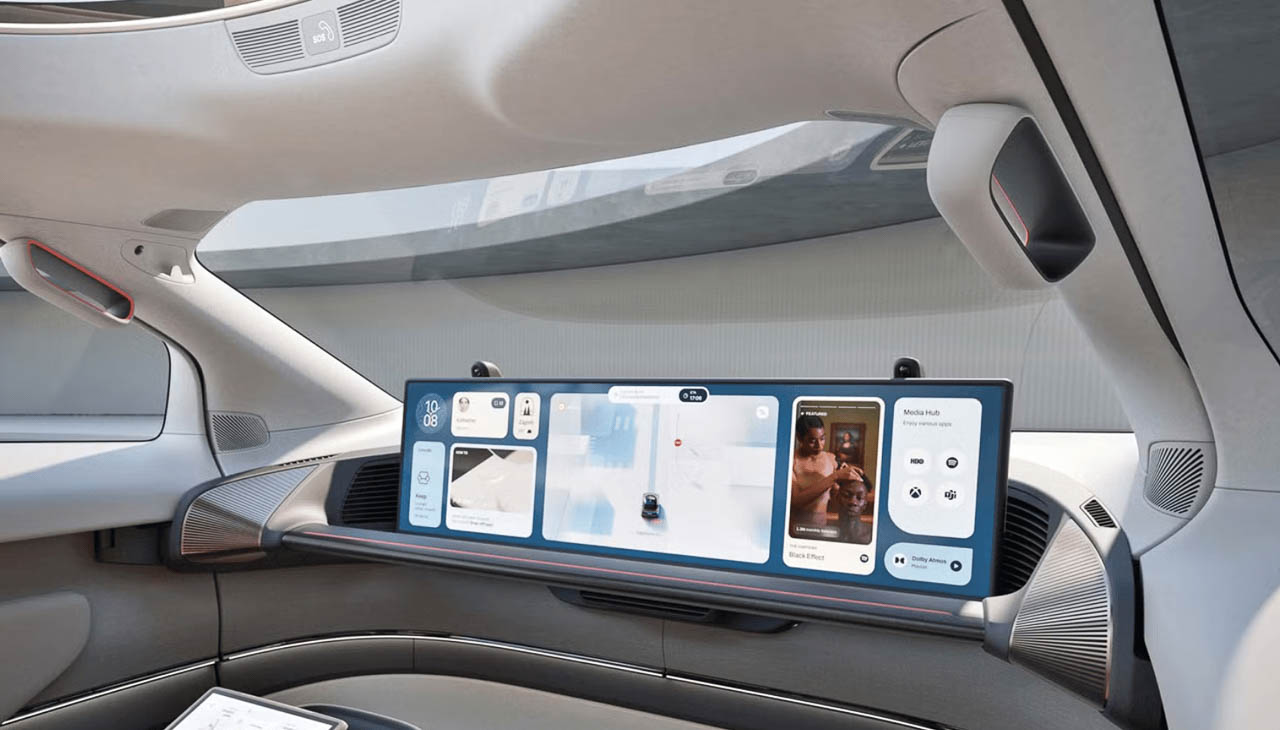
The answer, according to Rimac, looks more like a hotel room than a car. The Verne’s interior abandons the dashboard-centric layout that has defined automobiles for over a century. In its place sits a 43-inch ultra-wide display that stretches across the cabin like a digital horizon line, flanked by lounge seats that recline through five positions including fully flat. Rimac describes the space as “less automotive and more like a living room,” and the company means this literally. There are no controls to learn, no interfaces to master, no traditional automotive vocabulary at all.
Designing From the Inside Out
Most vehicles begin as an engine bay connected to a passenger compartment. The proportions follow predictable rules: hood length communicates power, wheelbase suggests stability, and the cabin fits whatever space remains after mechanical necessities claim their real estate. The Verne inverts this hierarchy completely.
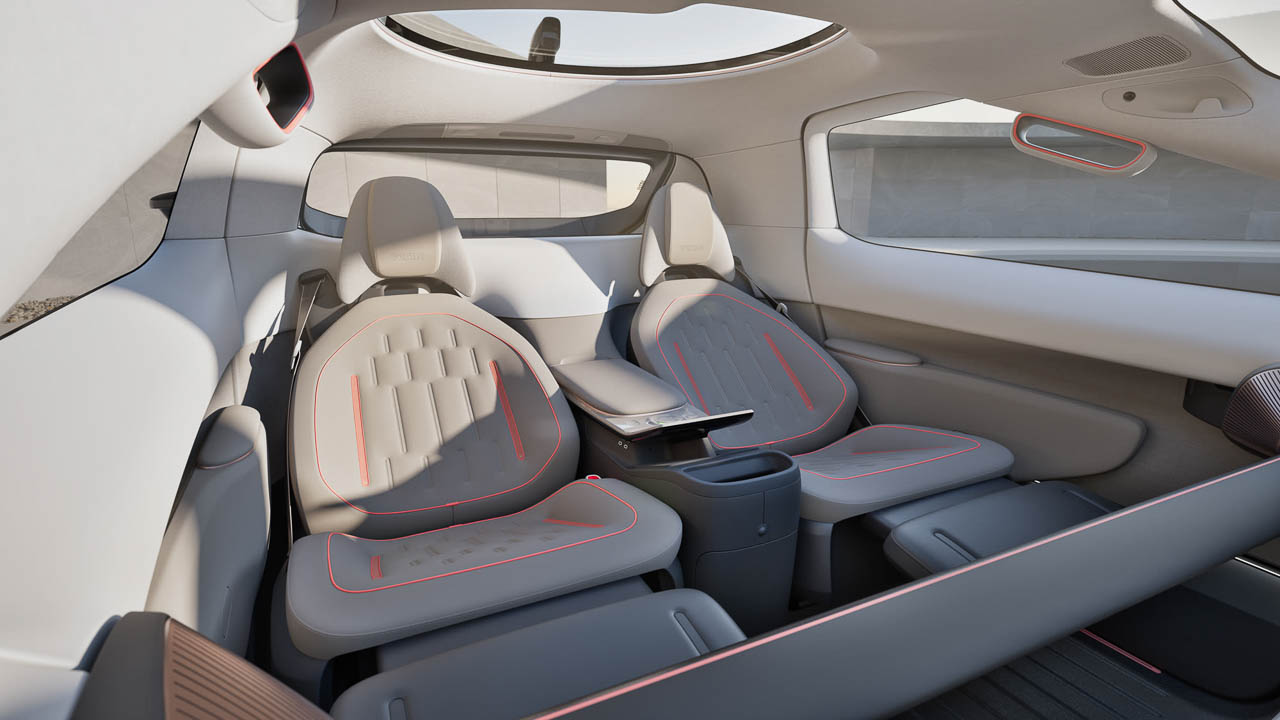
Rimac’s design team started with a two-person living room brief and worked outward. The result is a compact exterior with a trapezoidal profile, short overhangs, and a tall cabin that claims more legroom than a Rolls-Royce despite fitting easily on narrow European streets. This is not marketing exaggeration. When you remove the engine bay, transmission tunnel, and driver’s cockpit, the remaining volume can be redistributed entirely toward passenger comfort.
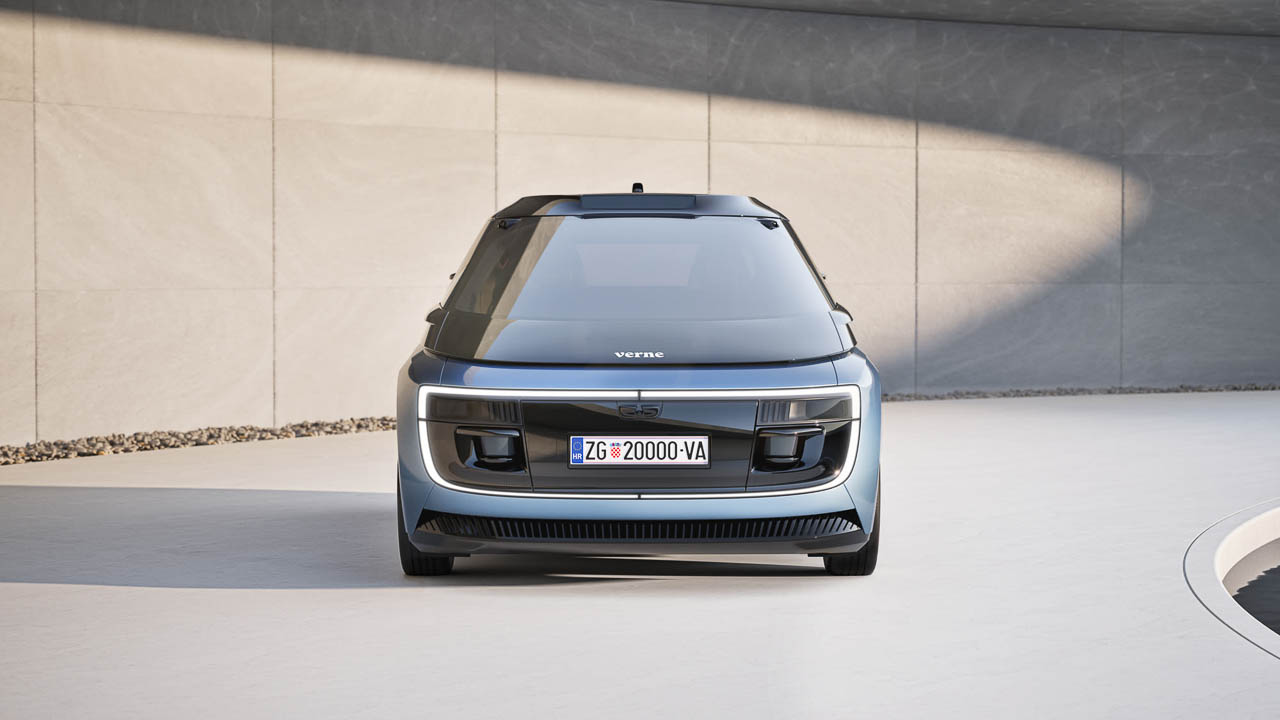
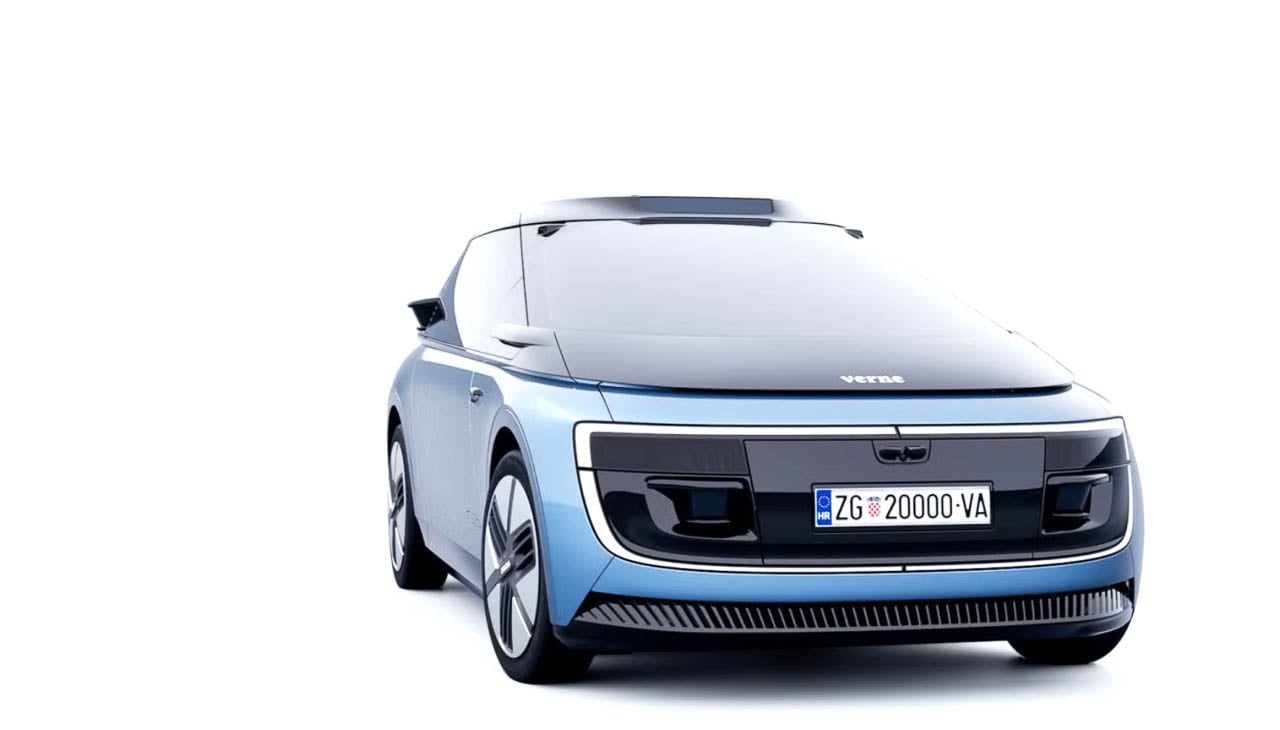
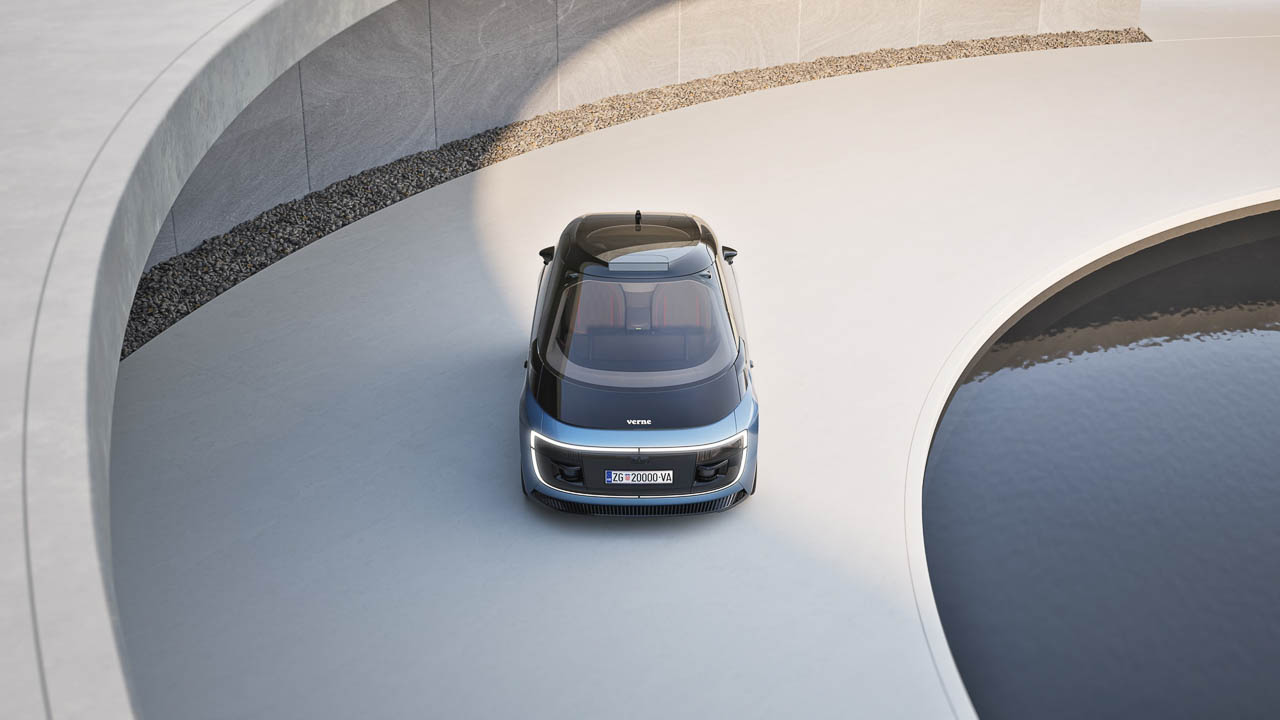
The exterior reads as a clean monovolume pod, almost architectural in its simplicity. Unlike many autonomous test vehicles, which wear their sensor arrays like medical equipment strapped to the roof, the Verne integrates its Mobileye hardware directly into the bodywork. The lidar, radar, and camera systems that enable Level 4 autonomy remain invisible from the passenger’s perspective. This design choice reflects a deeper philosophy: the technology should enable the experience without announcing itself.
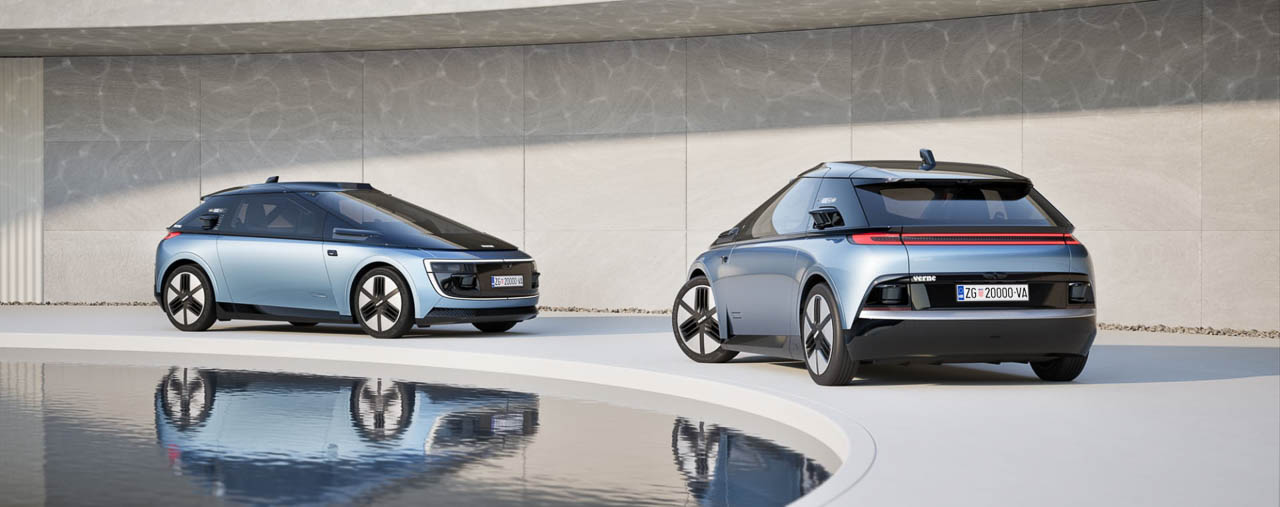
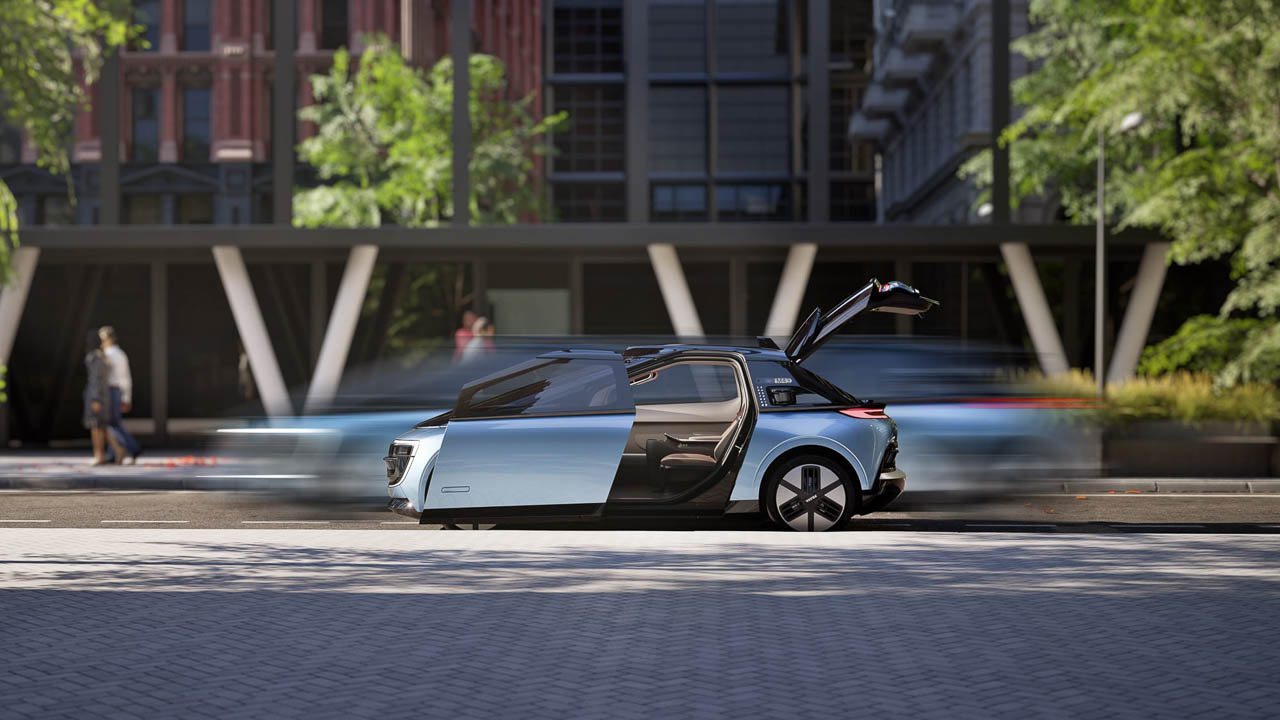
Twin sliding doors reinforce this architectural thinking. Rather than swinging outward into traffic or requiring passengers to squeeze past a door edge, Verne’s doors glide along the body, opening a full entry that lets you step in and sit down in a single motion. For a vehicle designed to operate in dense urban environments, picking up passengers along crowded curbs, this is not merely convenient. It is the kind of detail that separates mobility design from automotive styling.
The Lounge Cabin as a New Typology
Step inside the Verne and the absence of traditional automotive elements creates an immediate spatial shift. There is no steering column to navigate around, no center console dividing driver from passenger, no dashboard cluttering the forward view. The cabin feels less like sitting in a car and more like settling into a premium railway compartment or private jet. The 43-inch display serves multiple functions depending on context: cinema screen, workspace, or simply a window to curated content during transit.
A 17-speaker audio system surrounds the cabin, and the circular Halo ring sunroof overhead washes the space in ambient light that Rimac calibrated to feel warm and residential rather than automotive. The seats themselves draw more from airline business-class design than traditional car buckets, with deep recline options that transform the vehicle into a genuine nap pod. What makes this interior approach significant is not the individual features. Large screens and reclining seats exist in luxury vehicles already. The significance lies in the coherence: without a driver to accommodate, every design decision can optimize for passenger experience alone. The seating geometry, the display placement, the ambient lighting, the acoustic tuning all work toward a single purpose rather than competing with driver-centric requirements.
Rimac included one deliberate exception to the screen-dominated interface. A physical “Median” control sits within reach, providing a tactile way to start and end rides. In a cabin stripped of mechanical controls, this single physical interaction point offers psychological reassurance. You are still in control of something, even when the vehicle handles everything else. This is furniture design meeting transportation design, with transportation losing its traditional priority.
Why Two Seats Is a Design Choice, Not a Limitation
The Verne’s two-seat configuration will strike many observers as restrictive. Conventional automotive thinking says more seats equal more utility, more potential passengers, more flexibility. Rimac’s research led them to a different conclusion.
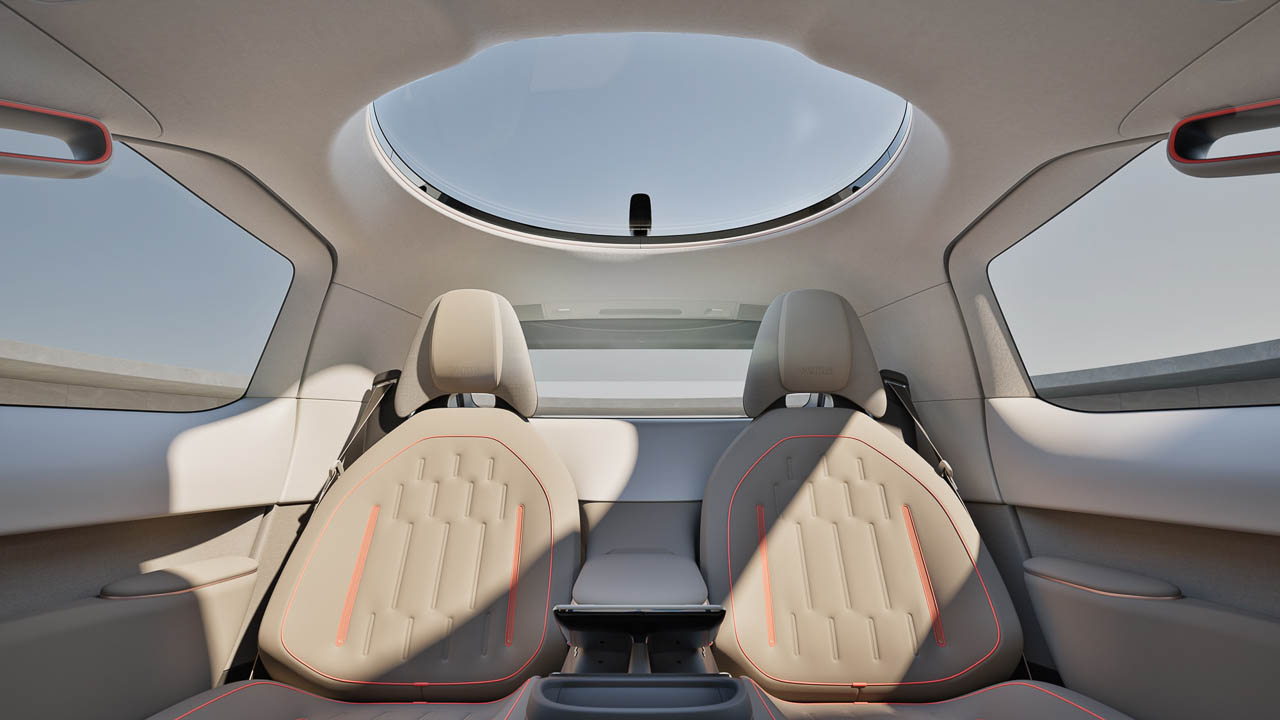
Analysis of ride-hailing data reveals that approximately 90% of trips involve one or two passengers. The rear bench seat in a typical sedan, the one that supposedly provides flexibility, sits empty on nine out of ten journeys. This is not an argument against four-seat vehicles. It is an argument for purpose-built alternatives. By eliminating that largely unused rear space, Rimac freed up volume for stretch-out legroom, substantial luggage capacity, and a sense of openness that a cramped four-seat cabin cannot provide.
Right-Sizing Performance for Cities
The powertrain specification tells a story of intentional restraint. Where the Nevera produces nearly 2,000 horsepower, the Verne makes do with approximately 150 kW. The battery pack holds 60 kWh compared to the Nevera’s 120 kWh setup. Range reaches roughly 240 kilometers, modest by EV standards but more than sufficient for urban fleet operation where vehicles return to charging hubs between shifts.
This represents a deliberate rejection of the spec-sheet competition that dominates electric vehicle marketing. Rimac could have installed larger batteries and higher-output motors. The company certainly has the engineering capability. Instead, they optimized for city duty: lower material consumption, easier charging cadence, reduced manufacturing complexity, and a lighter footprint for the urban environments where Verne will operate. The performance numbers are not a compromise. They are a design decision as intentional as the sliding doors or the lie-flat seats.
Autonomy as Invisible Infrastructure
The Verne runs on Mobileye Drive, a purpose-built autonomous driving platform that integrates multiple lidar units, radar arrays, and over thirteen cameras. This sensor architecture enables Level 4 autonomy, meaning the vehicle can handle all driving tasks within its operational domain without human intervention or supervision. For design purposes, the important word is “invisible.” The entire autonomous stack exists to enable the clean cabin experience. Every sensor, processor, and software system works toward a single goal: erasing the need for human attention to the road.
Rimac extended this invisible infrastructure philosophy to the user experience layer. An app lets riders configure their preferred environment before the vehicle arrives: temperature, seat position, ambient lighting, music selection, even scent. When the Verne pulls up, your ride is already personalized. You do not adjust anything. You simply enter a space that was curated for you. This shifts the experience from operating a vehicle to inhabiting one. The entry system reinforces this transition: instead of a door handle, you unlock via keypad or app, a gesture more architectural than automotive, closer to entering a hotel room than climbing into a car.
A New Species of Urban Object
The Verne represents something the automotive industry has been circling for years without quite achieving: a vehicle designed entirely around passengers rather than drivers. Previous attempts at autonomous concepts retained too much conventional automotive vocabulary. They looked like cars that happened to drive themselves. The Verne looks like something else entirely, a mobile room that happens to move through cities.
Rimac plans initial deployments in European and Middle Eastern cities starting around 2026, with service hubs and charging infrastructure designed as extensions of the Verne’s visual language. The vehicle becomes part of a larger system, a fleet of identical pods circulating through urban environments, picking up passengers, delivering them, returning to charge. This is not personal transportation in the traditional sense. It is infrastructure that feels personal.
The questions this raises extend beyond Rimac’s specific implementation. What happens to automotive identity when the driver disappears? How do cities redesign curb space for vehicles that open sideways? Does the two-seat configuration represent a constraint or an intentional intimacy that larger vehicles cannot offer? The Verne does not answer all of these questions. But it is the first production-intent vehicle that forces the industry to ask them seriously.
The hypercar maker from Croatia has delivered something unexpected: a slow, quiet pod that may influence urban mobility design more profoundly than any 250-mph supercar ever could. Sometimes the most ambitious engineering is knowing when to stop.
The post Rimac’s Verne Turns the Robotaxi Into a Private Lounge on Wheels first appeared on Yanko Design.
Read More . . .|
 | Tweet