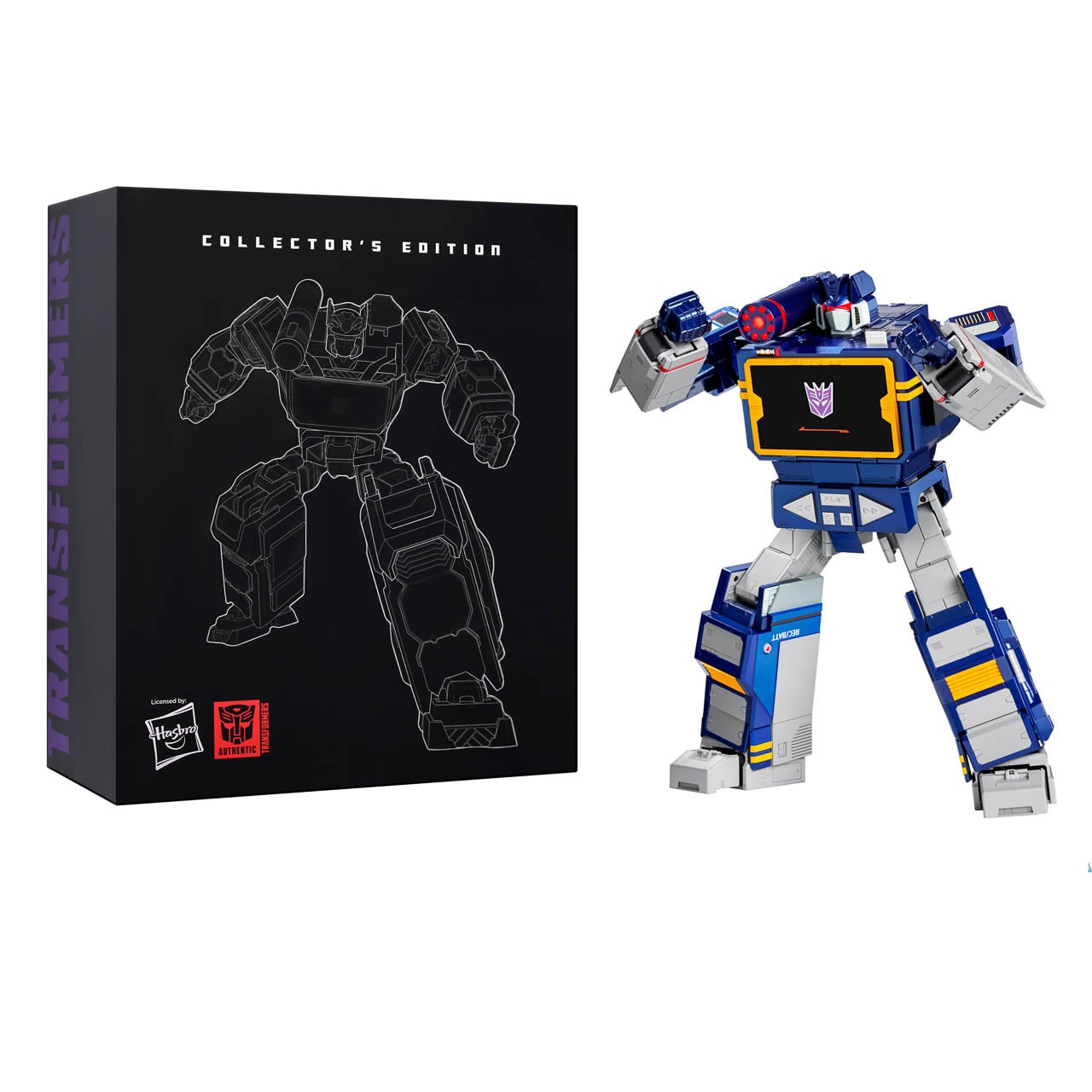
Robosen has spent years perfecting the art of making metal transform on command. Their latest collaboration with Hasbro takes that expertise and applies it to one of the most design-conscious characters in TRANSFORMERS history: Soundwave, the Decepticon whose cassette player form defined an entire era of toy aesthetics.
Designer: Robosen
The G1 Flagship Soundwave represents something more interesting than another collectible robot. It’s a study in how designers can honor iconic industrial design while pushing the technical boundaries of what consumer robotics can achieve. The original 1984 Soundwave toy worked because it made sense. A portable cassette player was something you carried. It had buttons, a display window, speakers. The disguise wasn’t just clever, it was culturally relevant.
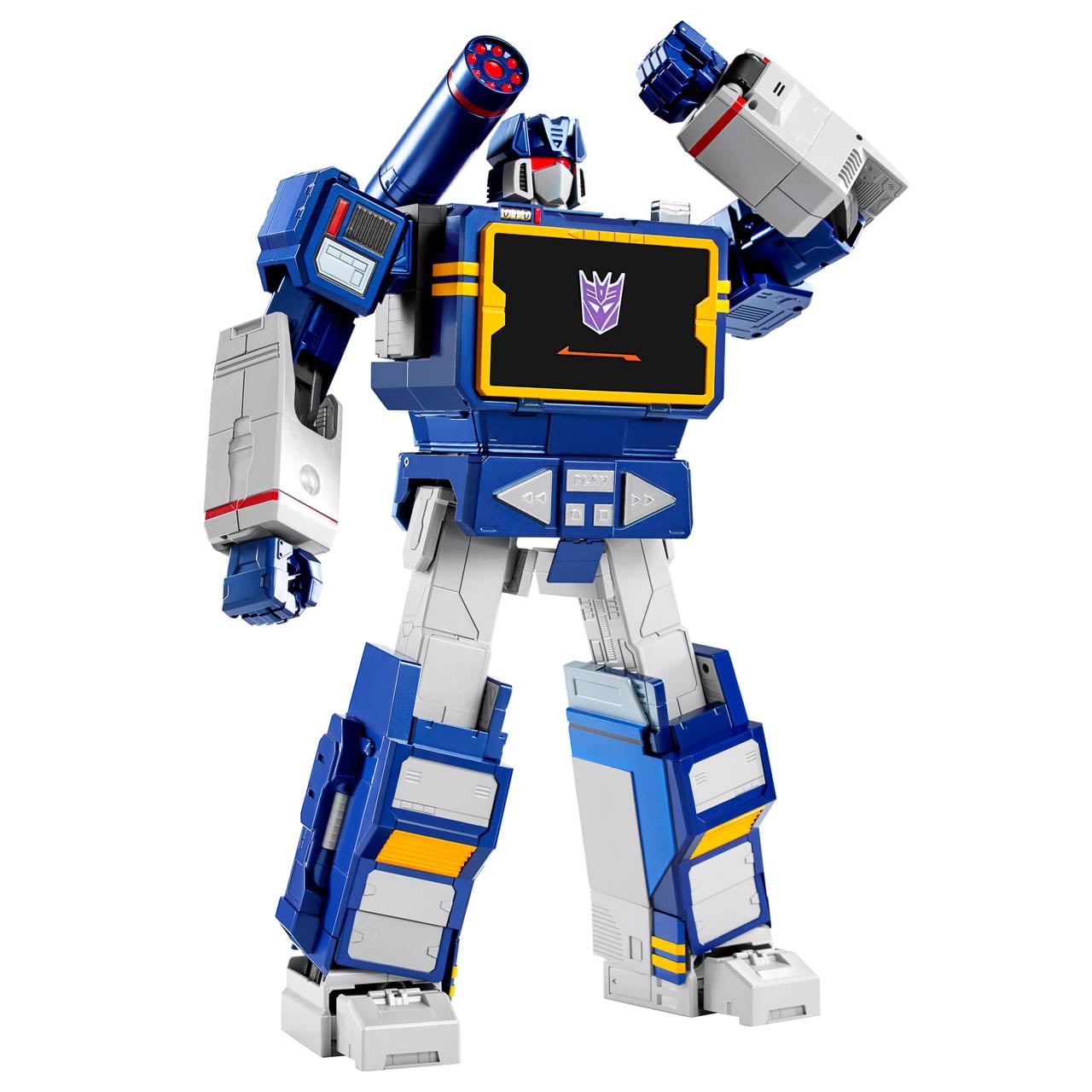
Robosen’s interpretation maintains that design logic while adding functional depth that the original could only suggest. The robot actually works as a Bluetooth speaker when in cassette mode. The tape deck buttons on the front panel control playback, pause, and track skipping. There’s even an integrated recording feature accessible through those same retro-styled controls.
The Cassette Player as Design Icon
The Sony Walkman launched in 1979. By 1984, when Soundwave first appeared in toy form, the portable cassette player had become one of the most recognizable consumer electronics forms in existence. Rectangular, pocketable, with a clear window showing the tape spools and a row of tactile buttons along the bottom edge. This wasn’t arbitrary product design. It was the distillation of function into form that industrial designers spend careers trying to achieve.
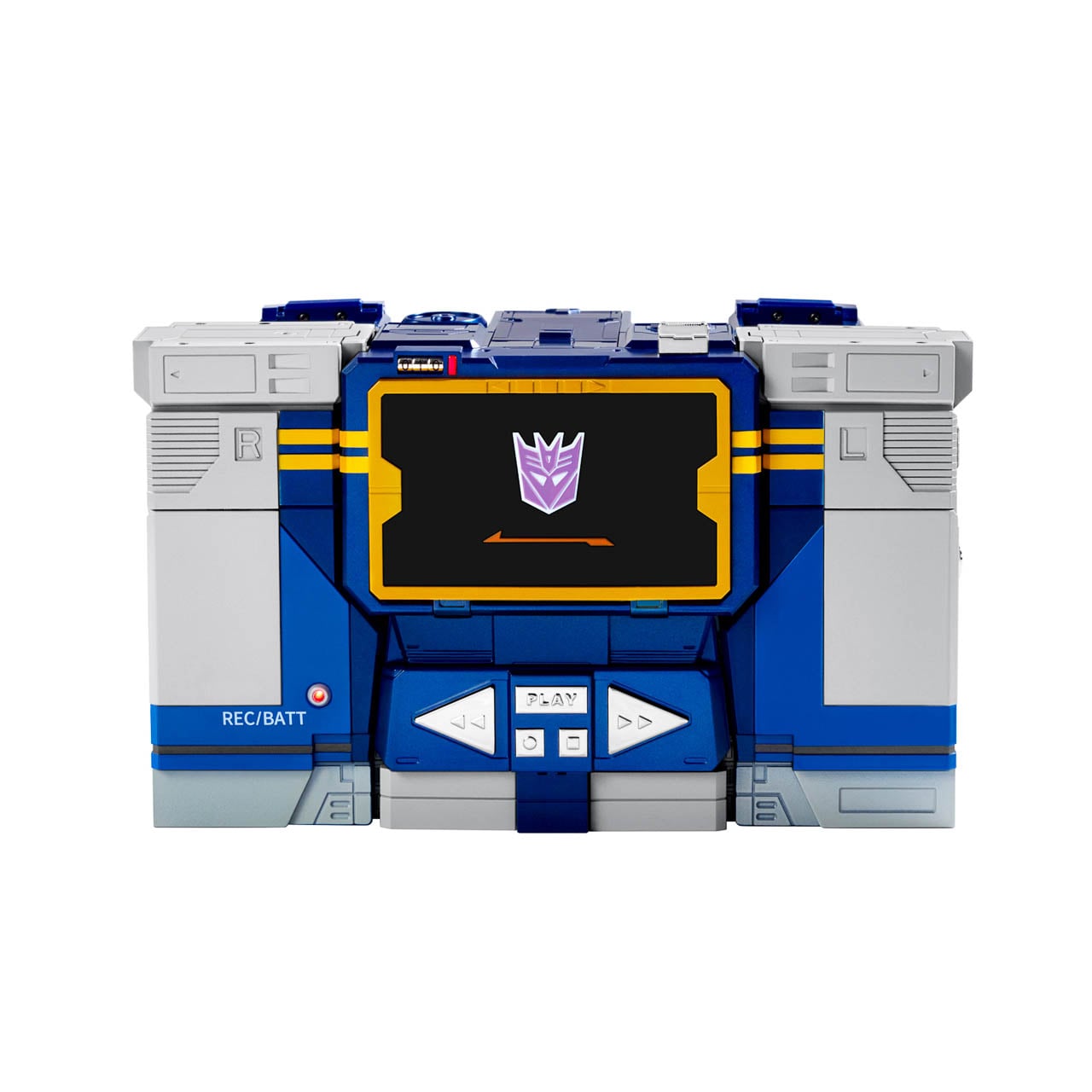
Soundwave’s original toy designers understood something fundamental: the best disguises reference objects people already trust. A cassette player in 1984 was friendly technology. You saw them everywhere. The genius of Soundwave as a character lies in this design decision. He hides in plain sight by becoming an object so ubiquitous that nobody questions its presence.
Robosen’s 2025 interpretation carries this design philosophy forward while acknowledging that cassette players now occupy nostalgic rather than practical cultural space. The form factor triggers recognition and emotional response rather than functional expectation. This shift from utility to symbolism changes how the design needs to perform. It must read as authentic to fans who remember the original while communicating “premium collectible” to anyone encountering it fresh.
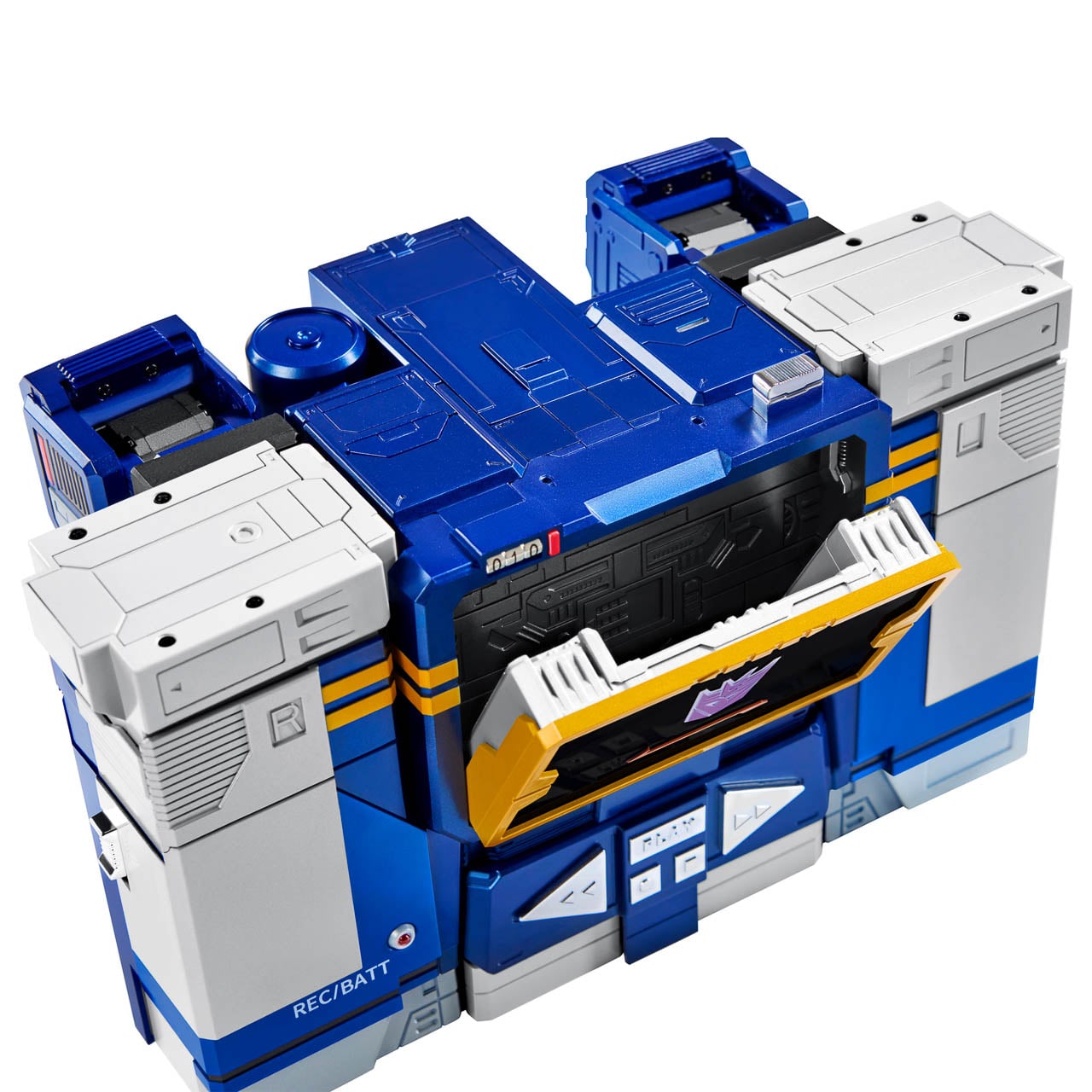
The proportions matter here. Original Soundwave toys were constrained by the need to fit actual toy cassettes inside the chest compartment. Robosen’s version maintains those proportions not because they’re functionally necessary, but because they’re aesthetically correct. Deviation would break the silhouette that defines the character.
Surface Language and Material Decisions
The G1 aesthetic demanded specific material choices that go beyond color matching. Original Soundwave toys used a particular shade of blue with silver and gold accents that fans recognize instantly. But the original also had the specific surface characteristics of 1980s injection-molded plastic: slight texture variations, mold lines, the particular way chrome-plated parts caught light differently than vacuum-metallized ones.
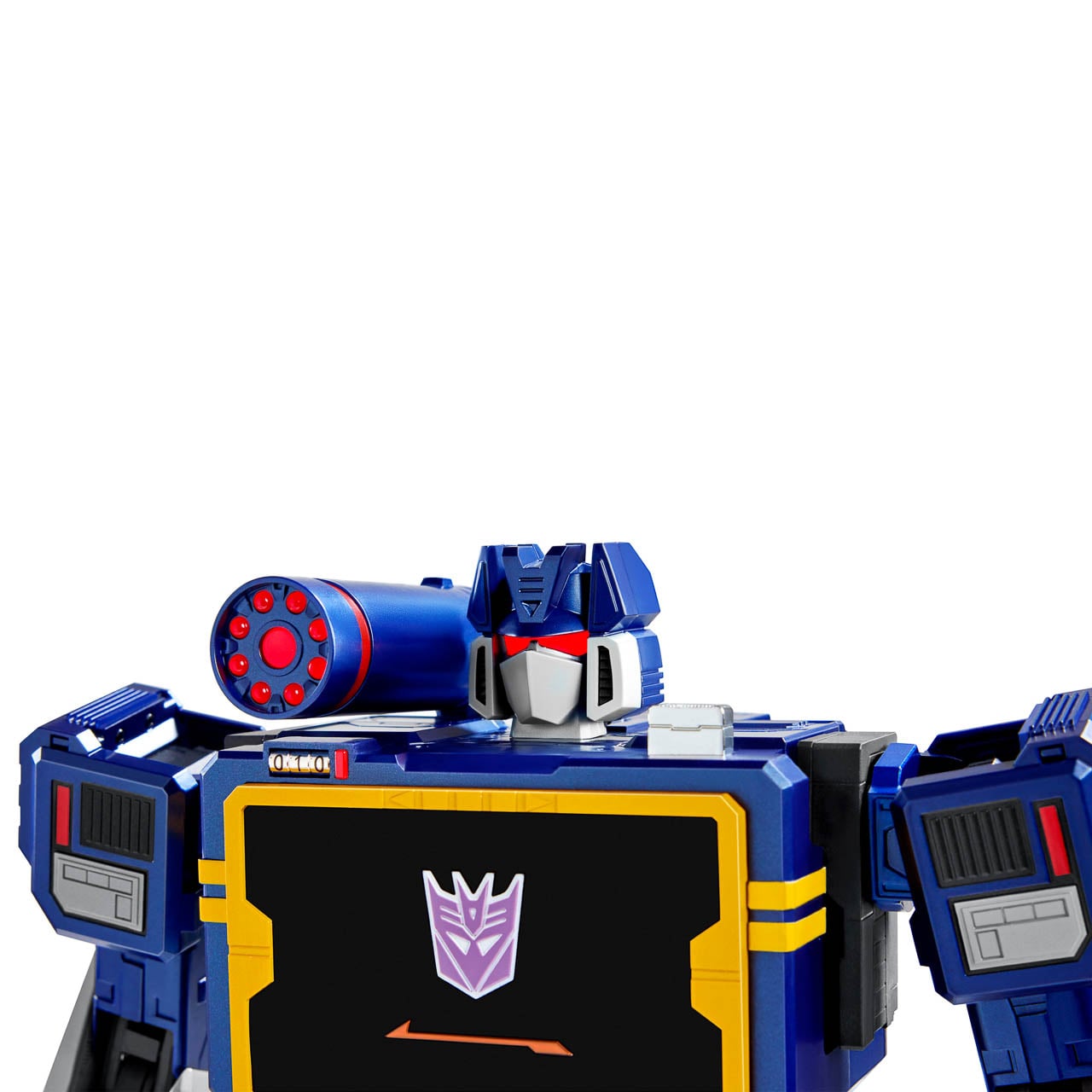
Robosen’s version matches those colors while upgrading the materials to support both the mechanical stress of repeated transformations and the visual expectations of collectors who will display these at eye level. The chest cassette window features actual transparency rather than a printed graphic. This seems like a small detail, but it fundamentally changes how the object reads. A printed graphic is decoration. A transparent window is architecture.
Surface textures vary intentionally across the figure. Some panels feature subtle grain that references the original toy’s plastic molding characteristics. Others present smoother finishes appropriate for their fictional function as viewscreens or armor plating. This attention to tactile variety creates what industrial designers call “material truth,” where surfaces communicate their purpose through texture rather than relying entirely on color or shape.
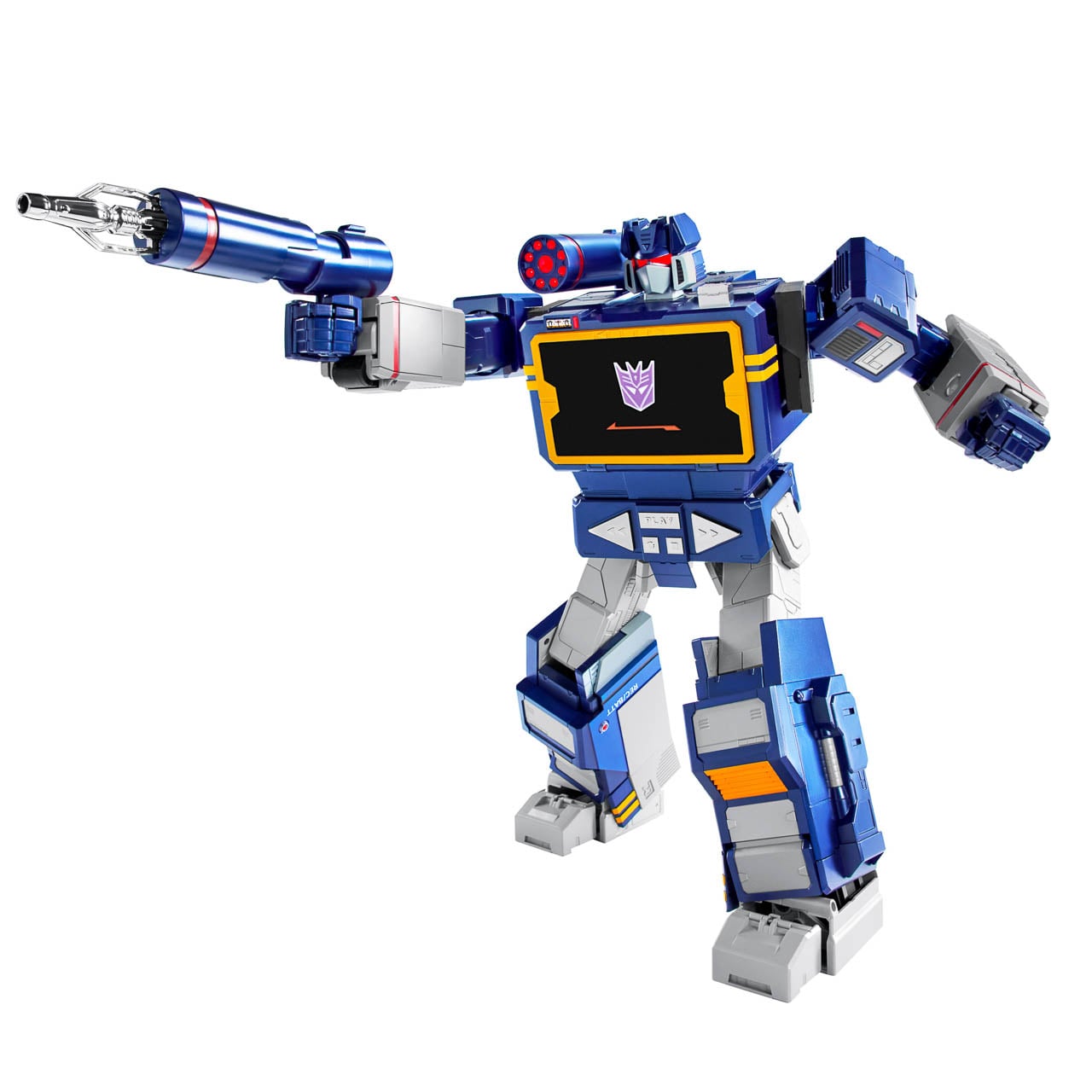
The shoulder cannon glows with animated lighting effects, adding dynamic visual interest without betraying the vintage inspiration. Gold paint applications use metallic finishes that catch light similarly to the chrome and vacuum-metallized plastics of 1980s toys, but with durability that modern collectors expect. The color temperature of the gold matters. Too warm reads as cheap costume jewelry. Too cool reads as modern and wrong. Robosen found the specific yellow-gold that triggers 80s nostalgia.
Engineering Constraint as Design Driver
The technical challenge of automated transformation created design constraints that ultimately improved the final object. Robosen developed new servo technologies specifically for Soundwave, paired with upgraded algorithms that coordinate dozens of moving parts into a smooth transformation sequence. But the interesting design story isn’t the technology itself. It’s how hiding that technology shaped the aesthetic decisions.
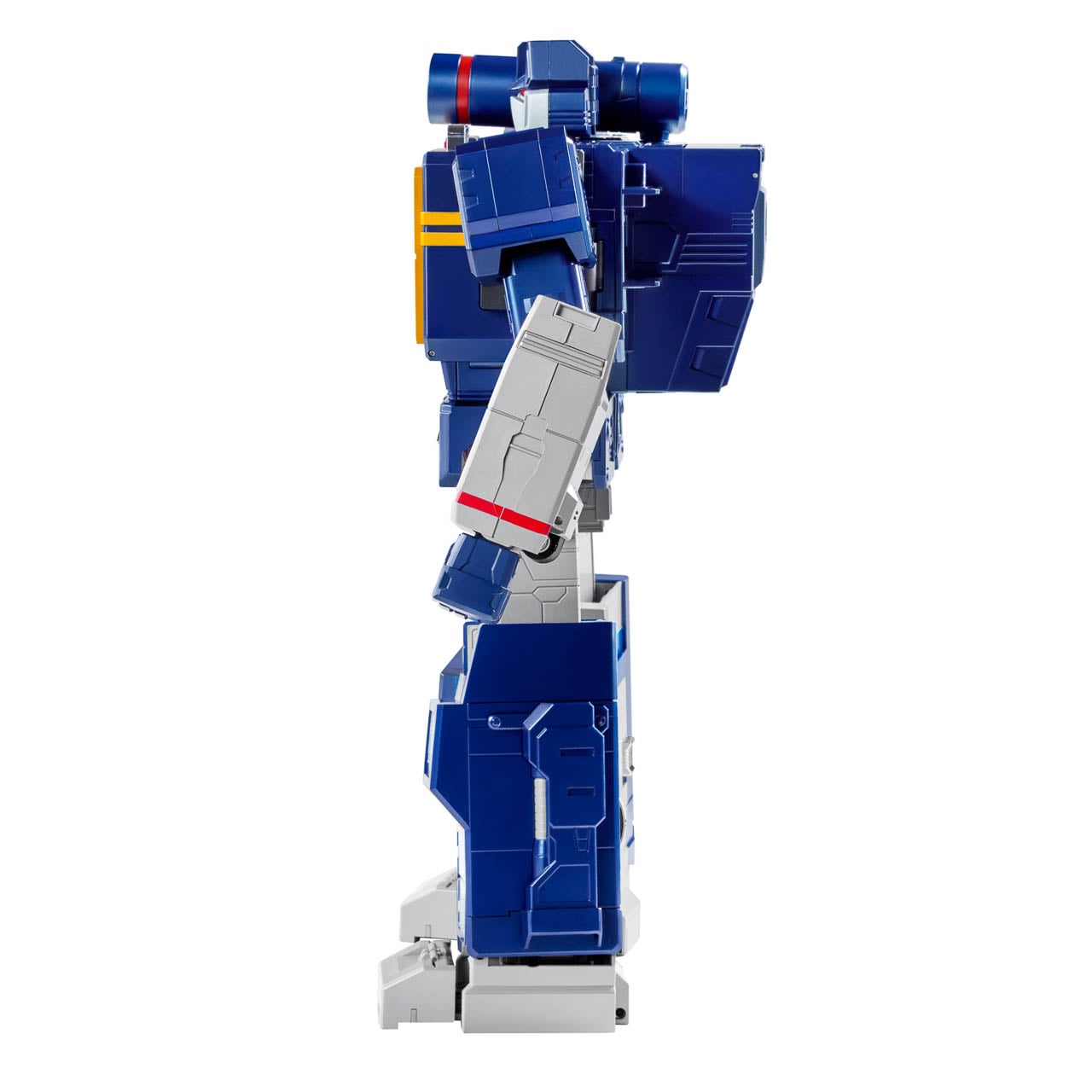
The servo placement had to account for the cassette player’s boxy proportions while still allowing the robot mode to achieve recognizable poses. Soundwave’s character design has always featured a relatively stocky build with prominent shoulder-mounted accessories, and Robosen needed their servo architecture to accommodate that silhouette without visible motor housings destroying the aesthetic. This is classic industrial design problem-solving: the mechanism disappears so the form can speak.
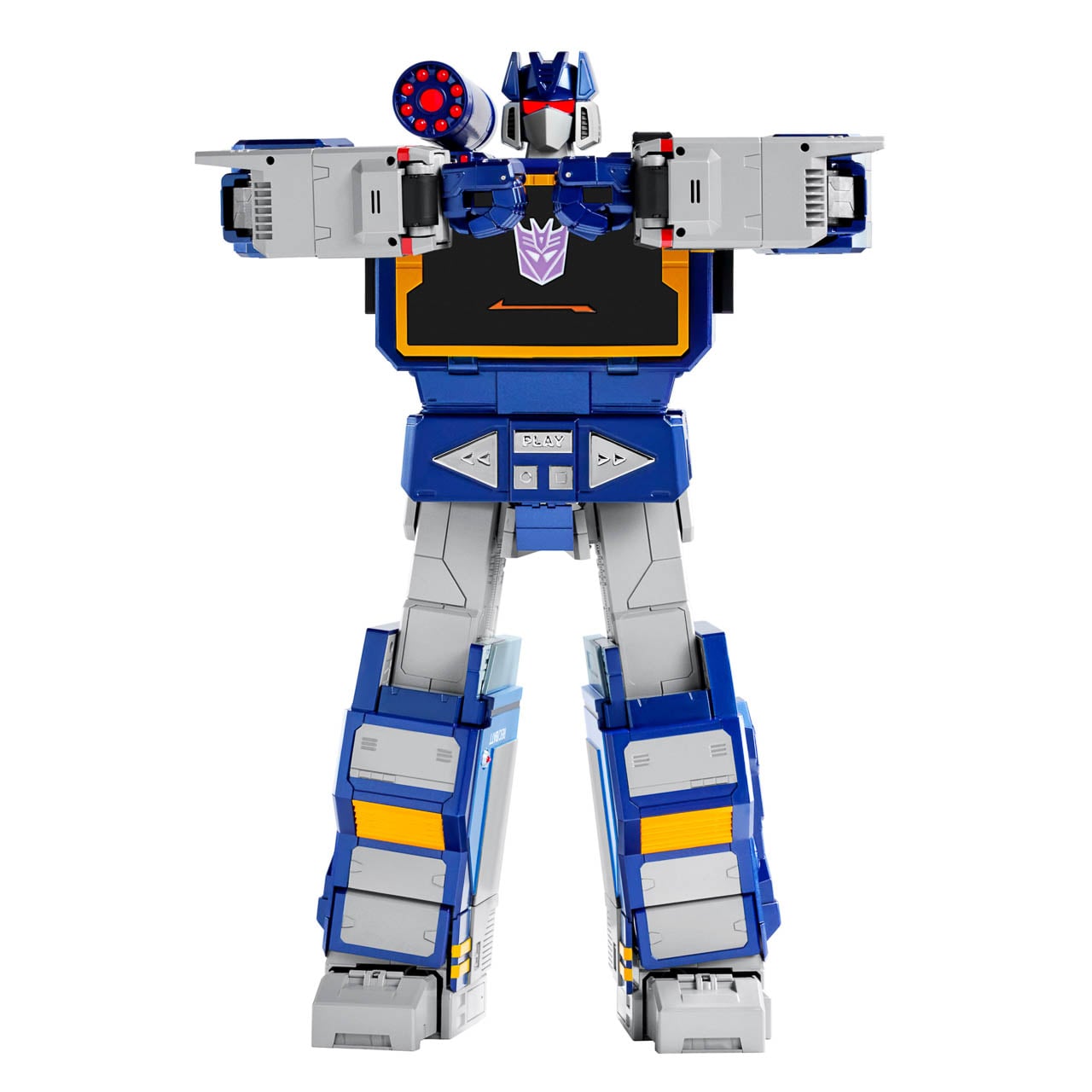
Weight distribution presented another constraint that became design opportunity. A Bluetooth speaker needs certain components in certain places for audio quality. A transforming robot needs weight balanced for stable standing poses. Robosen’s solution integrates the speaker components into the chest cavity in a way that actually improves the robot mode’s center of gravity while positioning drivers optimally for sound projection in cassette mode. Function serving multiple purposes simultaneously is elegant engineering, but it’s also the kind of solution that creates better products.
Accessories and Proportional Relationships
Soundwave’s neutron assault rifle and sonic cannon aren’t afterthoughts. They’re design elements that complete the character’s visual language. The rifle features proportions that reference the original toy’s weapon while scaling appropriately for the larger figure. It attaches and detaches through magnetic connection points that preserve the clean lines of the robot mode when weapons are removed.
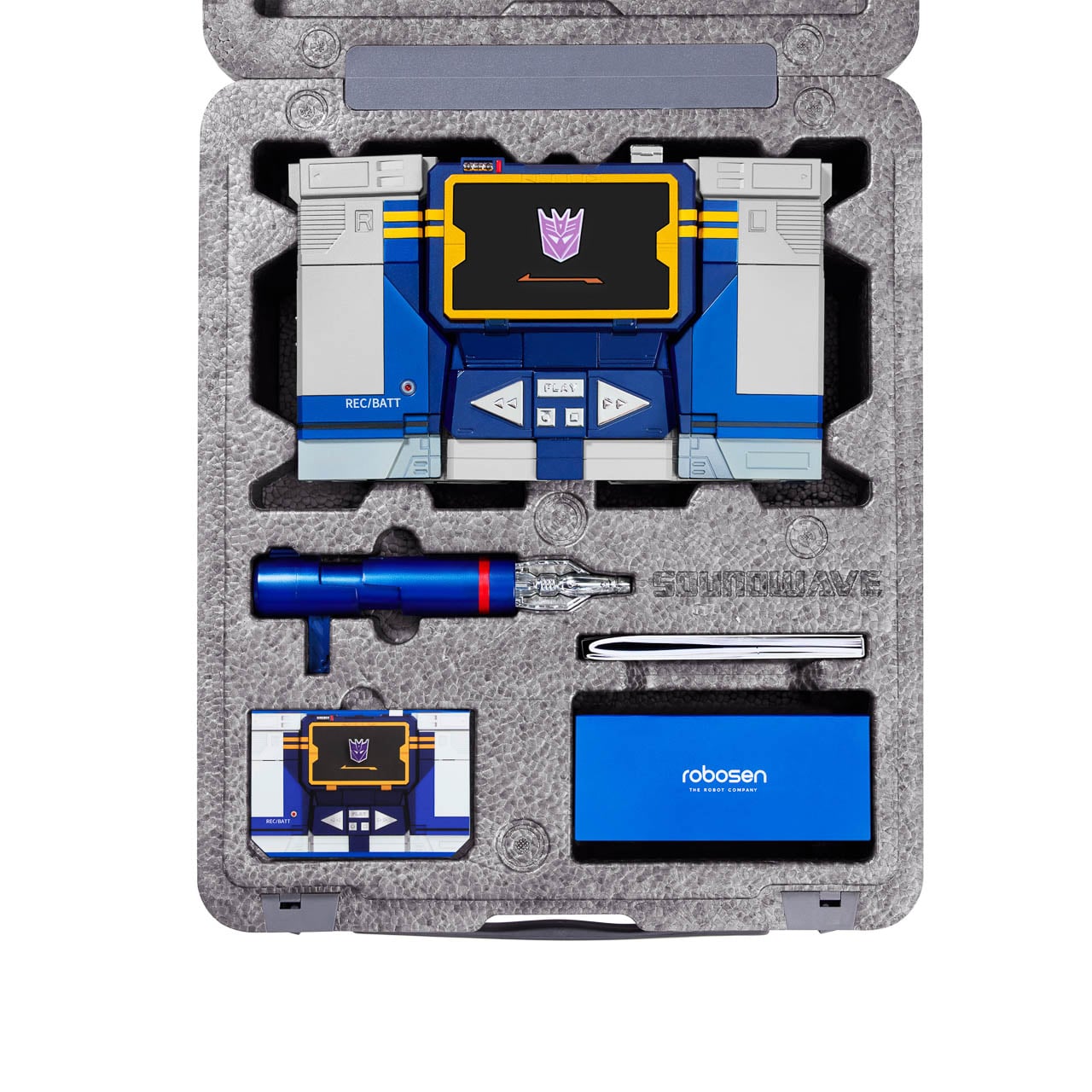
The shoulder-mounted sonic cannon deserves particular attention. Its proportions relative to Soundwave’s shoulder width, its angle of mounting, its extension beyond the body envelope: these relationships were established in the original 1984 toy and refined through decades of subsequent figures. Robosen’s designers had to honor those proportions while engineering animated lighting into the accessory, creating a glowing effect that suggests the weapon is charged and ready.
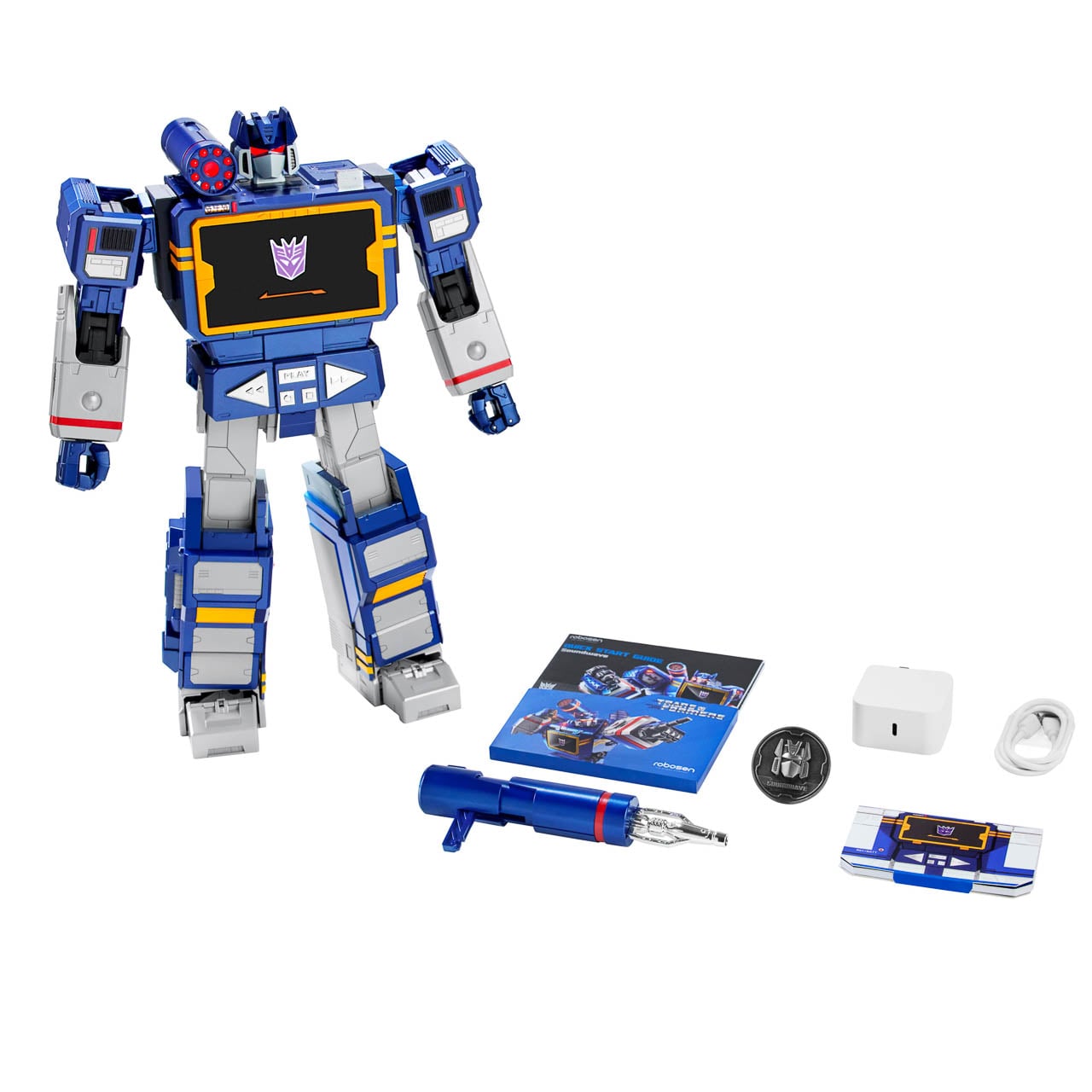
Both accessories store within the cassette mode’s form factor, maintaining the object’s disguise integrity. This kind of design consideration, making sure every component has a home in both modes, separates serious transforming robot design from figures that simply fold into vaguely recognizable shapes. The accessories don’t just belong to Soundwave. They belong to his silhouette.
Functional Disguise as Design Philosophy
The Bluetooth speaker functionality represents a design philosophy that could influence the entire collectible robotics category. Most high-end collectible figures exist purely for display. They’re sculptures with premium price tags. Robosen’s approach suggests these objects can occupy space in our lives more actively.
A Soundwave that plays your music isn’t just a shelf piece you admire occasionally. It’s an object that earns its place through daily utility. The recording function, controlled through those satisfyingly tactile tape deck buttons, adds another layer of interaction. Leave yourself a voice memo through a transforming robot. It’s absurd and delightful, but it’s also philosophically interesting: the disguise becomes real.
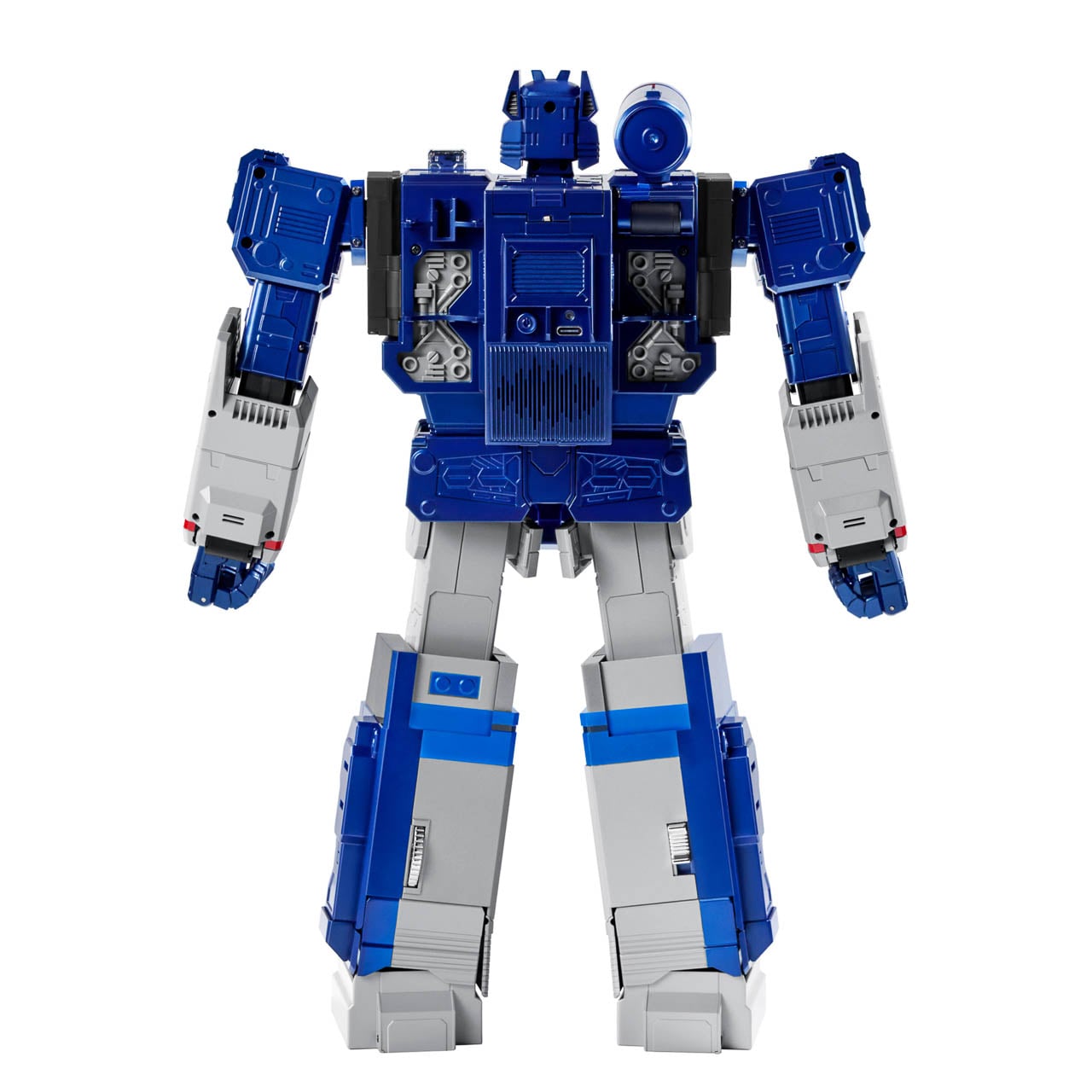
This creates a design feedback loop. The original Soundwave disguised himself as a functional object. Robosen’s Soundwave actually is a functional object. The fiction collapses into reality in a way that feels appropriate for a property built around the idea of machines hiding among us. When your Bluetooth speaker transforms into a robot, the TRANSFORMERS concept stops being a story you remember and becomes an experience you have.
The $999 pre-order price (rising to $1,399 after the initial 30-day window) positions Soundwave alongside high-end audio products, not just toys. Robosen is essentially arguing that a collectible robot can be both display piece and functional device, and the design work supports that argument convincingly. The premium isn’t just for nostalgia. It’s for an object that justifies its existence through use.
Design Coherence Across the Lineup
Soundwave joins Optimus Prime, Bumblebee, and Grimlock in Robosen’s expanding TRANSFORMERS lineup. Each figure establishes different design challenges based on their alt-modes and character proportions. But what makes the collection work as a collection is consistent design language across mechanically diverse objects.
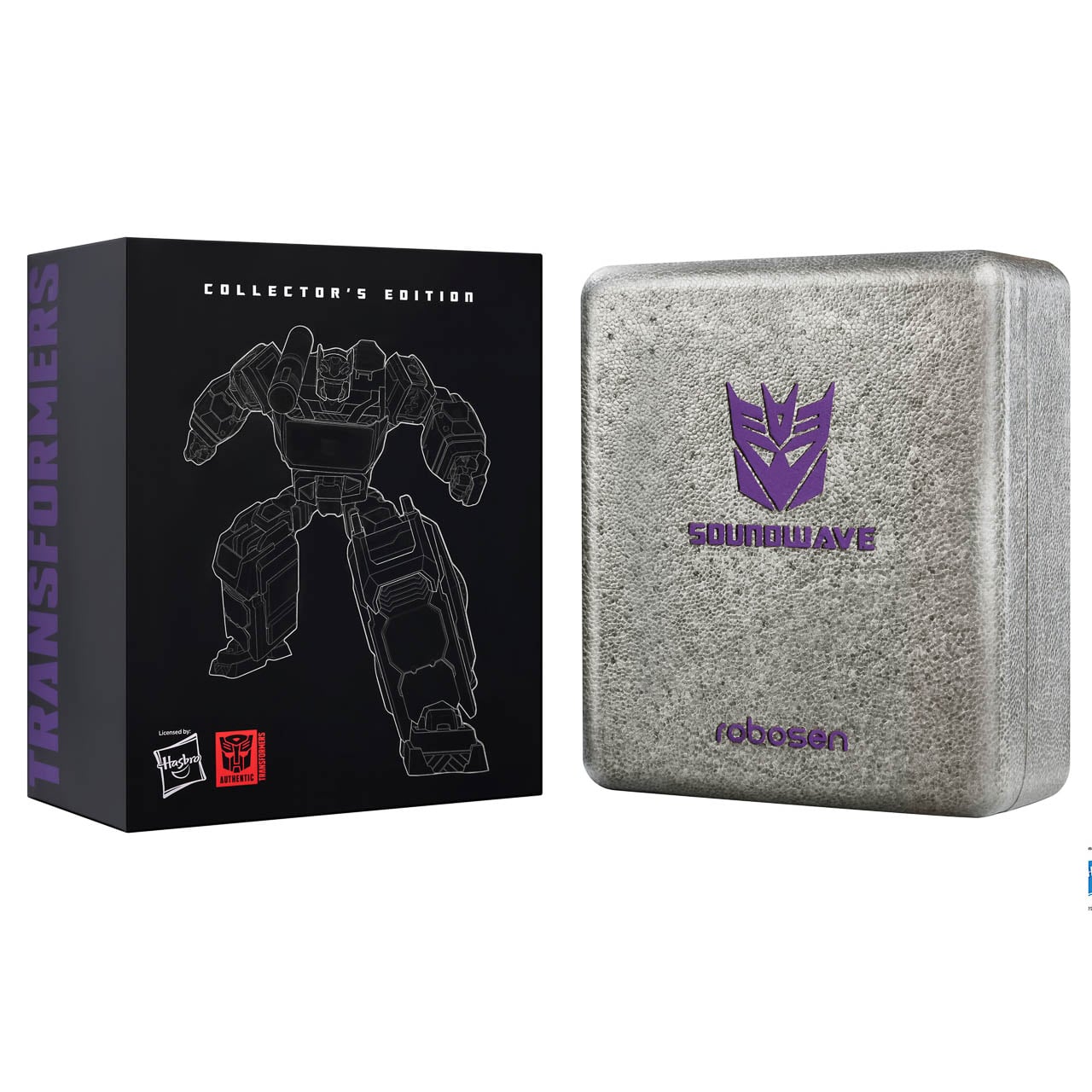
The servo placement follows similar principles across figures, creating comparable ranges of motion and transformation speeds. Joint articulation uses consistent detent patterns that give all four figures the same tactile feedback. Surface treatment applies metallic finishes at similar scales and positions. Lighting integration follows established brightness and color temperature standards. These unifying decisions mean the figures read as a coherent family rather than separate projects that happen to share a license.
When displayed together, Optimus, Bumblebee, Grimlock, and now Soundwave present a unified design statement about what premium TRANSFORMERS collectibles can be. They share DNA despite their radically different forms. This is harder to achieve than it sounds. Plenty of collectible lines feature individual great pieces that look awkward together. Robosen’s design discipline prevents that problem.
Pre-orders are live now at Robosen.com, with HasbroPulse.com availability coming soon. For design enthusiasts and TRANSFORMERS collectors who appreciate the intersection of nostalgia and engineering achievement, Soundwave represents the current peak of what consumer robotics can accomplish within the constraints of beloved intellectual property.
The post Robosen’s TRANSFORMERS Soundwave Does What the 1984 Original Only Pretended: It Actually Works as a Speaker first appeared on Yanko Design.
Read More . . .|
 | Tweet