Digital photography has spent three decades eliminating friction, yet the Flashback ONE35 V2 deliberately reintroduces it. This compact camera restricts shooters to 27 exposures per roll and can withhold images for 24 hours before revealing them, treating scarcity and anticipation as design features rather than technical shortcomings. The approach feels counterintuitive until you recognize what it actually targets: not the act of taking pictures, but the behavioral patterns that infinite storage and instant preview have normalized.
Flashback, the Australian startup behind the ONE35, positions the device as “film feeling, digital freedom,” a phrase that captures the central tension the product navigates. The camera doesn’t simulate film chemistry or grain patterns. Instead, it borrows the behavioral scaffolding of disposable cameras, the fixed exposure count, the inability to review shots immediately, the delayed gratification of waiting for development, and grafts these constraints onto a reusable digital core. What emerges is less a nostalgic throwback than a deliberate intervention in how we interact with image-making tools.
The design argument here is worth parsing carefully. Constraint, when applied with intention, can redirect attention and reshape behavior in ways that pure capability expansion cannot. The ONE35 V2 doesn’t ask users to appreciate limitation for its own sake. It proposes that limitation might produce something that unlimited access has gradually eroded: the weight of a single frame, the suspense of unseen results, the social ritual of collective reveal.
Form Language and Material Identity
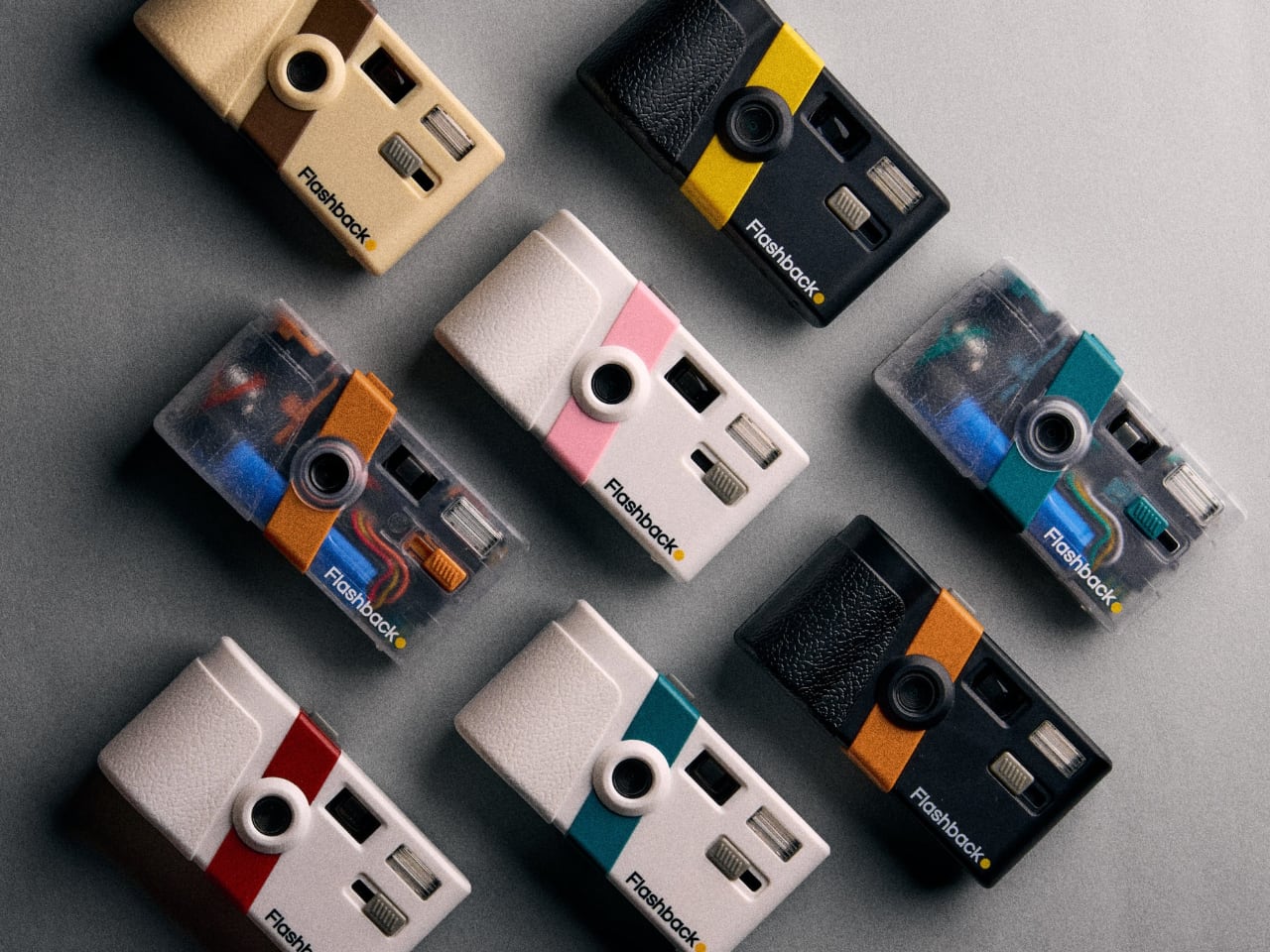
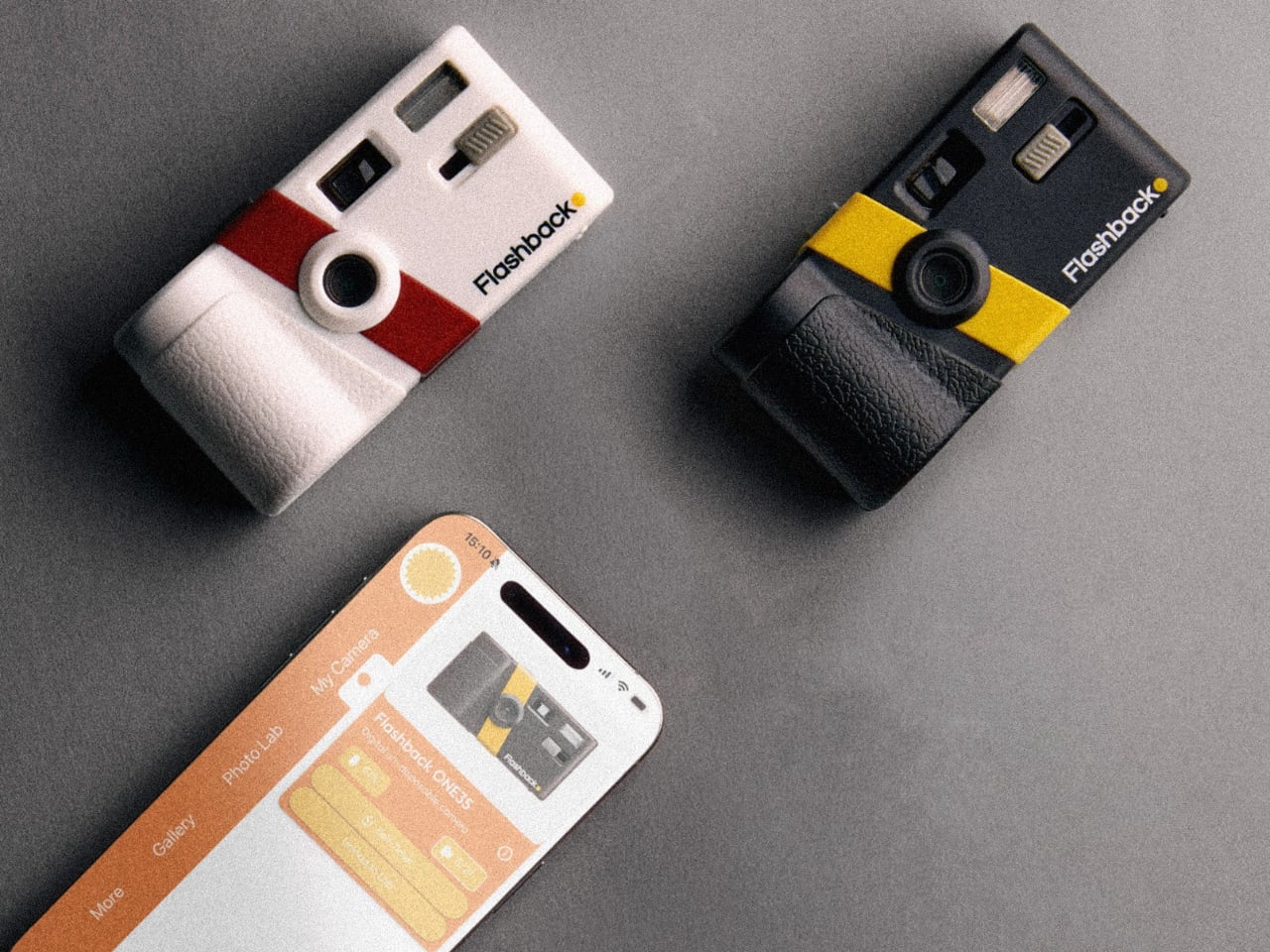
Physically, the ONE35 V2 speaks a dialect of late-1990s consumer electronics, updated with contemporary material sensibilities. The body arrives in eight colorways ranging from high-contrast pairings like Yellow/Black and Red/White to more subdued options like Coffee/Cream. Two variants feature transparent shells that expose internal componentry, a direct nod to the see-through electronics trend that peaked around 1999 with devices like the iMac G3 and translucent Game Boy Color. The proportions feel familiar, chunky without being bulky, designed to disappear into a jacket pocket or small bag.
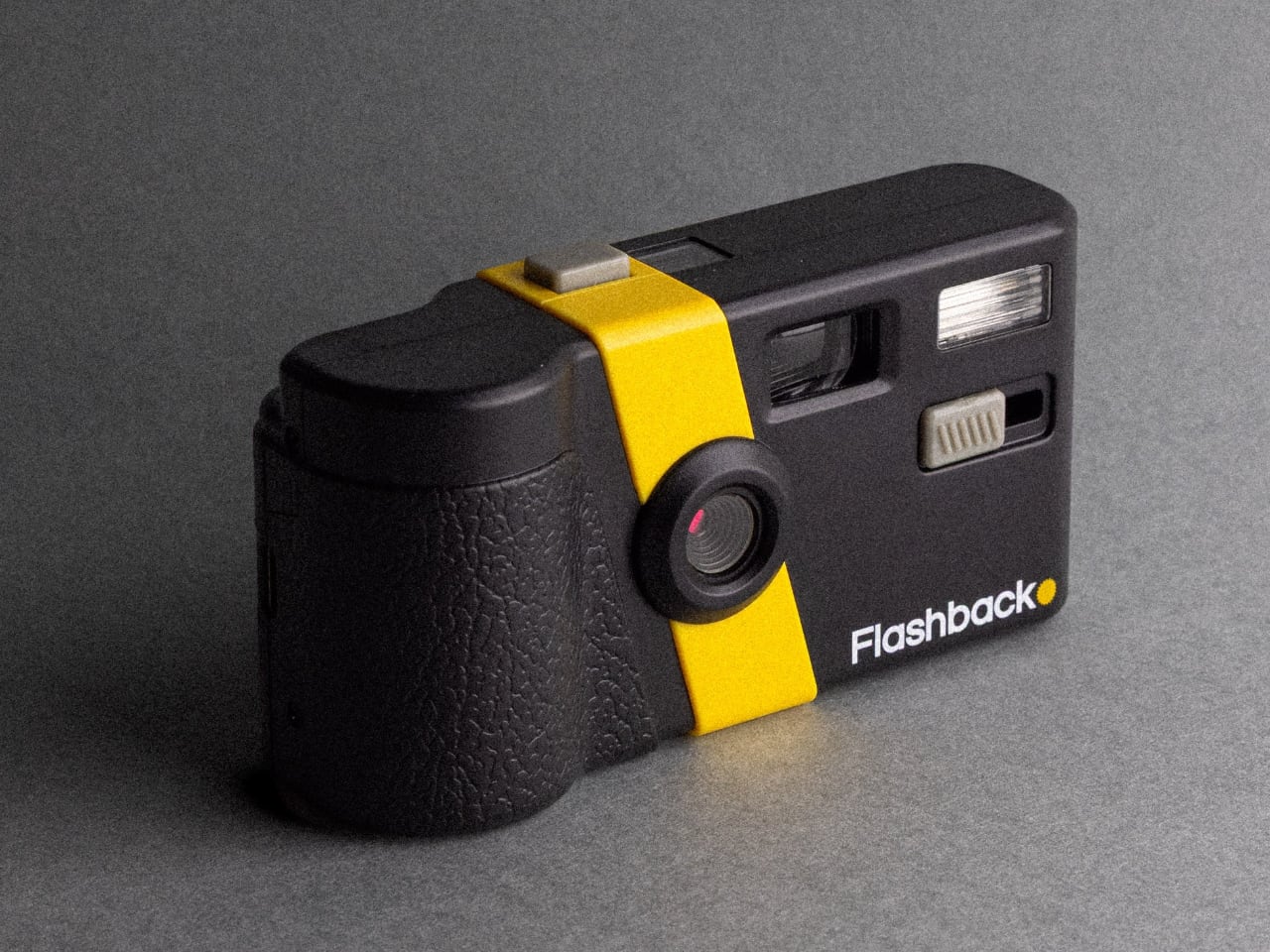
Color blocking dominates the visual strategy. Each variant commits to two tones maximum, avoiding the gradient meshes and complex surface treatments common in contemporary consumer tech. This restraint serves the object’s conceptual positioning: it looks like something you would find at a beach shop checkout in 2001, yet the material finish and assembly precision read as current. The plastic shells have a matte texture on most models, reducing fingerprint visibility and giving the camera a tactile presence that glossy alternatives would sacrifice.
The transparent variants deserve particular attention. Exposing circuitry and internal structure creates an honesty of construction that opaque housings inherently conceal. You see the battery, the sensor housing, the flash capacitor. This transparency also functions as a trust signal, suggesting the device has nothing to hide about its relatively simple internals. There’s no pretense of computational complexity here, just the essential components required to capture and store 27 images at a time.
Materiality extends to the accessory ecosystem. A vegan leather case at $19 positions the camera as an object worth protecting and displaying, not a disposable item despite its disposable-camera heritage. The existence of branded caps and lanyards suggests Flashback understands the ONE35 as a lifestyle product, something users might want to signal ownership of rather than simply use.
Interaction Architecture: How Constraint Reshapes Behavior
Twenty-seven exposures. That number, pulled directly from the standard frame count of disposable film cameras, functions as the ONE35 V2’s primary behavioral lever. Disposables dominated casual photography from the late 1980s through the early 2000s before smartphones consolidated image capture into always-available, unlimited-capacity devices. By imposing the same ceiling, the ONE35 V2 forces a kind of photographic triage that contemporary shooters rarely practice: you cannot spray-and-pray when each frame represents roughly 3.7% of your available shots.
Scarcity changes the shooting ritual in observable ways. Users report thinking before pressing the shutter, evaluating whether a moment warrants one of their limited frames. The camera transforms from a capture-everything tool into something closer to a curation device, where selection happens at the point of exposure rather than afterward in a bloated camera roll. Each shot carries psychological weight proportional to the constraint.
The 24-hour development delay in Classic Mode introduces a second behavioral intervention. Instead of chimping (the photographer’s habit of immediately reviewing each shot on the camera’s screen), users must wait a full day before seeing results. This delay severs the feedback loop that digital photography introduced, the instant gratification that allows endless re-shooting until the perfect frame emerges. Without that loop, users either accept what they captured or miss the moment entirely.
Flashback’s decision to include Digicam Mode alongside Classic Mode reveals a pragmatic understanding of user psychology. Some shooters want the constraint of limited exposures without the enforced patience of delayed development. Others want the full experience. By making the delay optional, the ONE35 V2 acknowledges that not every context suits maximum friction, a party might call for immediate sharing that a travel diary would not.
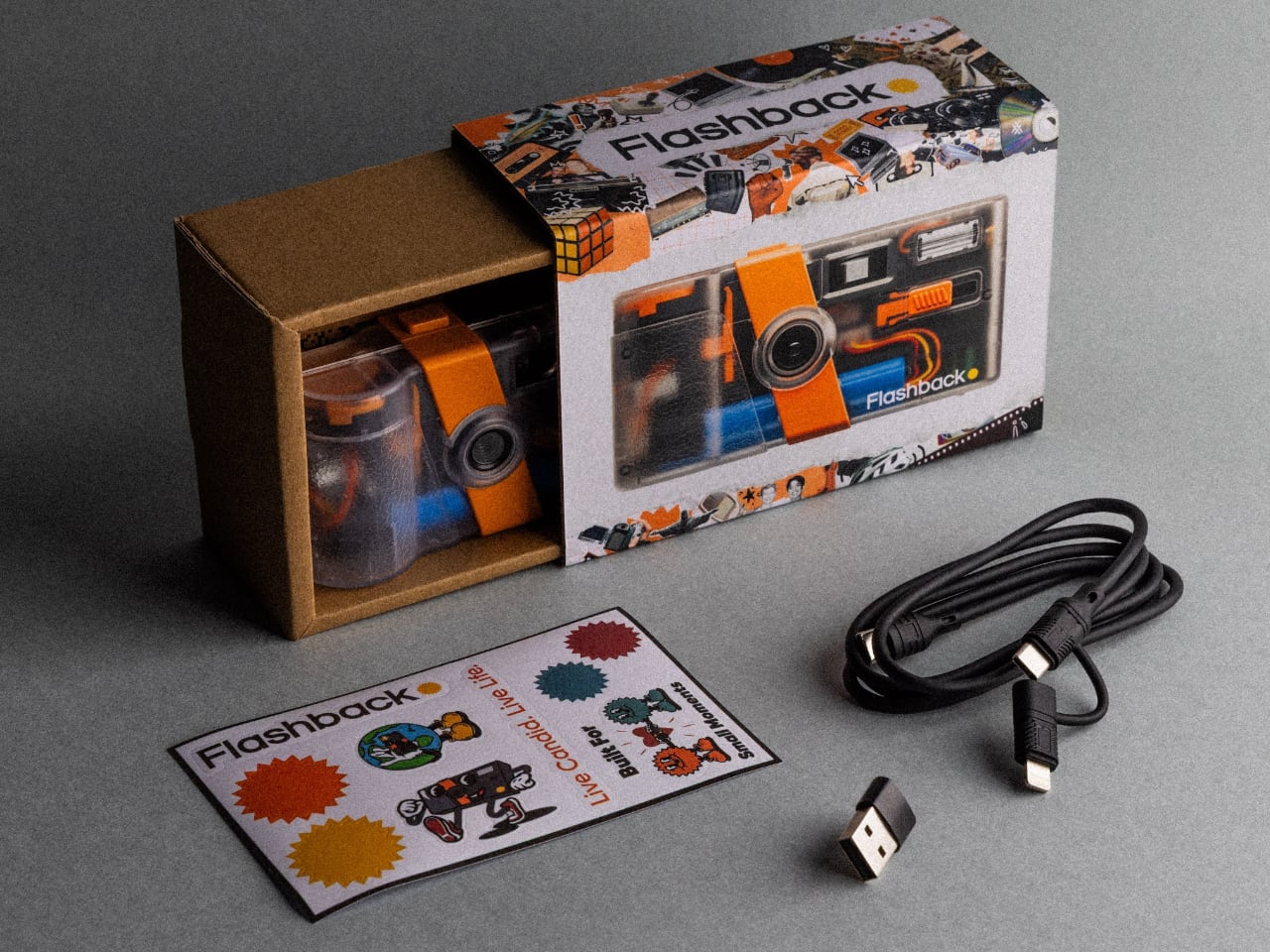
The transfer workflow also carries design intention. Photos unload via Lightning or USB-C cable to the Flashback app, which handles what the company frames as “development.” The cable requirement is notable in an era of wireless everything. It creates a deliberate moment of connection, a physical ritual that separates capture time from viewing time. You must decide to plug in, to initiate the transfer, to move from shooter to viewer.
What Constraint Produces
The behavioral implications extend beyond individual users into social dynamics. At parties or group events, the ONE35 becomes a shared object that circulates hand to hand, with each person granted temporary access to a limited pool of exposures. This communal aspect mirrors how disposable cameras functioned at weddings and gatherings in the pre-smartphone era: multiple people contributing to a single roll that no one could immediately review.
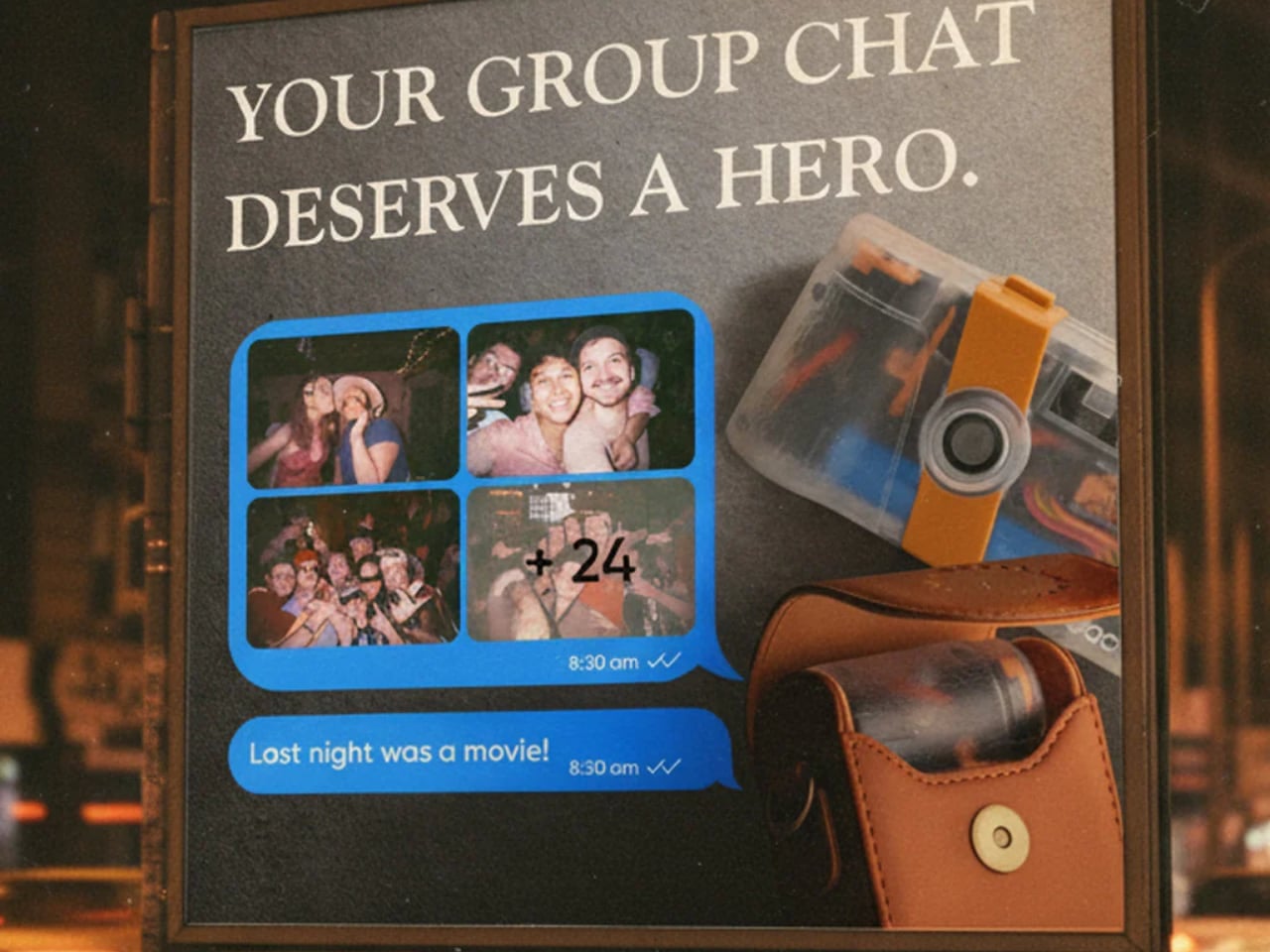
The delayed reveal transforms image sharing from instant broadcast into group ritual. When Classic Mode holds photos for 24 hours, the eventual viewing becomes an event rather than a continuous trickle. Group chats waiting for a camera’s worth of party photos to “develop” experience collective anticipation, a social texture that immediate availability cannot replicate. Flashback’s marketing leans into this with phrases like “your friends will be begging you to share.”
There’s also an environmental dimension to consider. Disposable cameras generate physical waste with every roll: plastic housing, battery, packaging, chemical development. The ONE35 V2 retains the behavioral structure while eliminating the material throughput. One device, rechargeable via USB-C, replaces hundreds of single-use cameras over its lifespan. The sustainability argument nests inside the experience design rather than leading it.
Cultural Positioning: Where This Object Lives
The ONE35 V2 enters a market already primed for analog revival and digital skepticism. Film photography has seen sustained growth since the mid-2010s, driven partly by aesthetic preference but also by users seeking relief from the infinite scroll of digital capture. Fujifilm’s disposable cameras routinely sell out. Kodak has reintroduced discontinued film stocks. The secondhand market for film cameras has pushed prices for once-cheap bodies into collector territory.
Within this landscape, the ONE35 occupies an interesting niche. It doesn’t require users to learn film handling, find processing labs, or pay per-roll development costs. The app handles what chemistry once did, for free, indefinitely. But it preserves the behavioral constraints that film imposed, the limitations that many film revivalists cite as the actual source of appeal. In this sense, the camera represents a kind of constraint extraction: pulling the valuable behavioral friction out of an analog medium and transplanting it into a digital one.
The “screen detox” movement provides additional context. Products and services promising to reduce smartphone dependency have proliferated over the past five years, from grayscale phone modes to minimalist devices like the Light Phone. The ONE35 V2 aligns with this impulse without requiring users to abandon connectivity entirely. You can still have your smartphone in your pocket. You simply capture certain moments with a different tool, one that encourages presence during the event and patience afterward.
Flashback’s origin story reinforces this positioning. Founders Kelric and Mack reportedly started the project after observing that partygoers spent more time on their phones than engaging with each other. The garage-prototype-to-Kickstarter arc (reaching $80,000 in 13 minutes, $800,000 total) suggests the observation resonated with a substantial audience. The subsequent Good Design Award and Shark Tank appearance mark a trajectory from indie curiosity to legitimate product category.
What the ONE35 V2 Signals
The camera’s success, 50,000 units across 68 countries, 10 million captured images, suggests that designed constraint has commercial viability beyond niche appeal. Users are paying $119 for a device that does less than their phones, specifically because it does less. This inverts the typical value proposition of consumer electronics, where more features justify higher prices.
What Flashback demonstrates is that subtraction can constitute a design feature when the thing being subtracted has become a source of friction itself. Unlimited storage, instant preview, always-on connectivity: these capabilities solved problems when they emerged, but they’ve also generated new ones. The ONE35 V2 proposes that rolling back certain capabilities, with intention and care, might address the second-order problems the first capabilities created. Pick up the camera. Feel its compact, slightly chunky form. Press the shutter knowing you have 26 frames left. That deliberate friction is the product.
The post The Flashback ONE35 V2 Turns Limitation Into Its Most Compelling Feature first appeared on Yanko Design.
Read More . . .|
 | Tweet